How to Stop Light Leaking Around Blackout Blinds
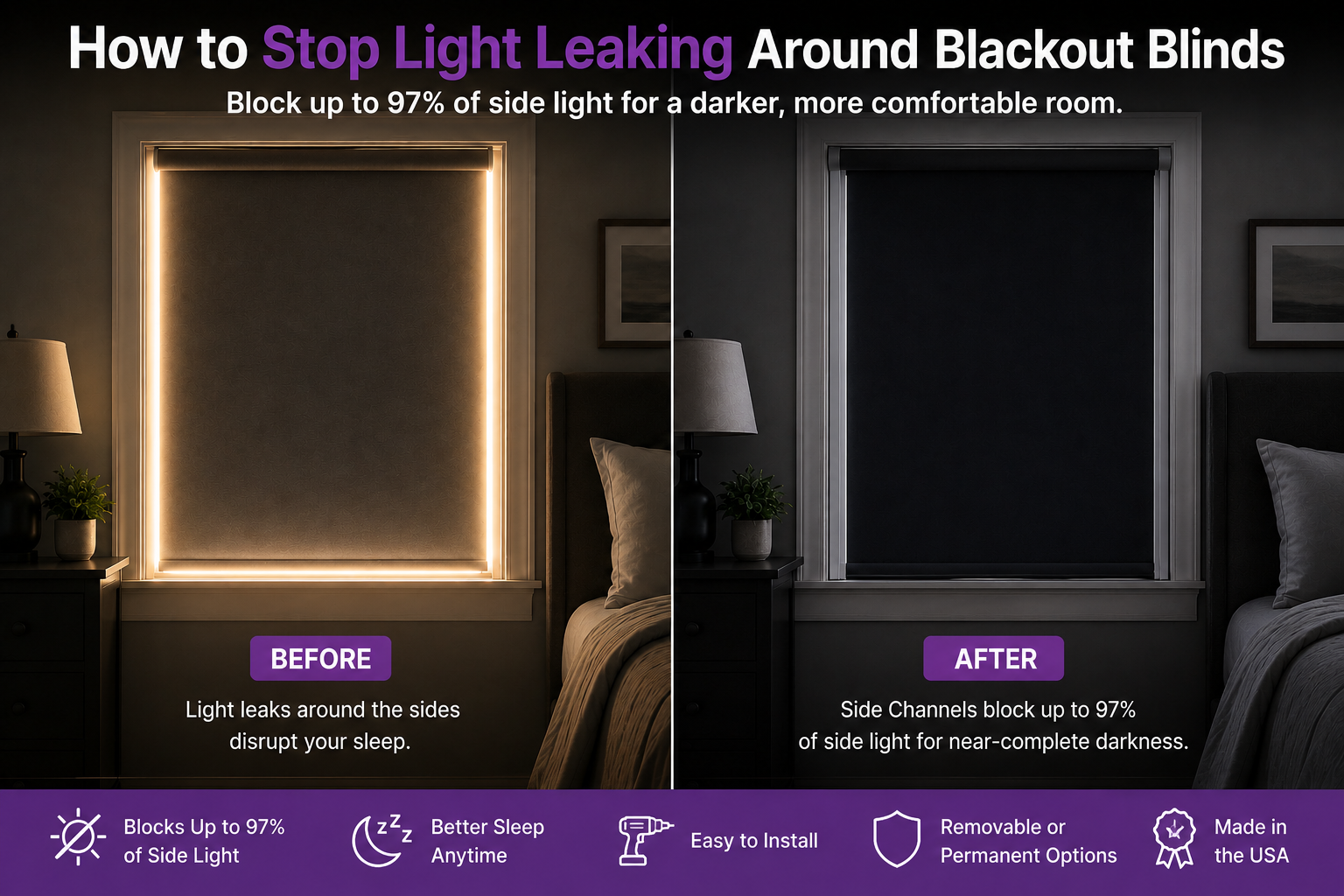
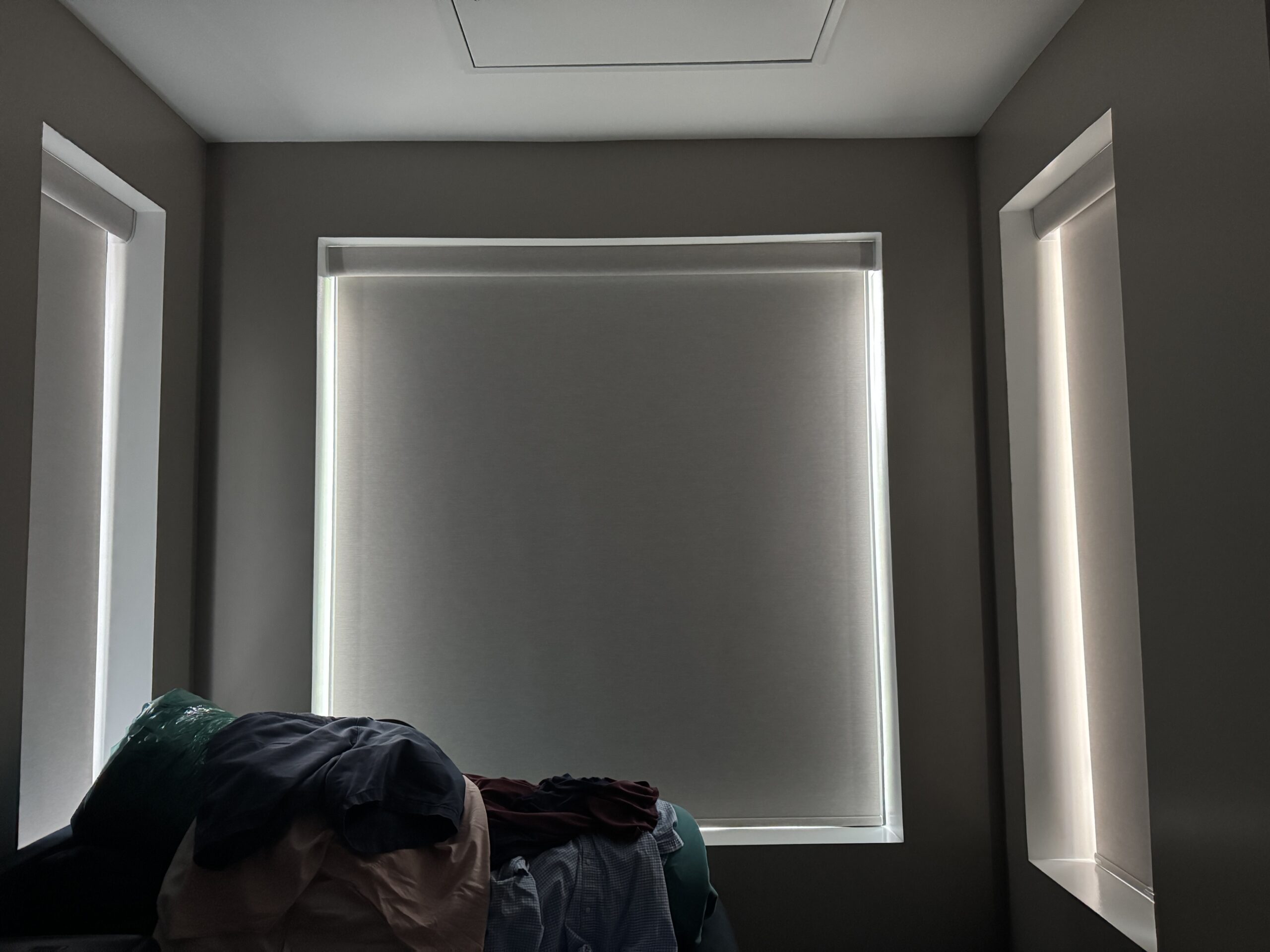
You invested in blackout blinds expecting a completely dark bedroom, only to discover bright strips of light streaming down the sides every morning.
You’re not alone.
After more than 30 years installing window treatments in thousands of homes, I’ve found that one of the biggest misconceptions homeowners have is believing “blackout” refers to the entire window. In reality, most blackout blinds only block light through the fabric itself. They do very little to stop light leaking around the edges.
Those side gaps are often the biggest source of unwanted light in a bedroom.
The good news is that this problem is completely fixable.
In this guide, you’ll learn why blackout blinds still leak light, what causes those annoying light gaps, and which solutions actually work—so you can create the darker bedroom you expected when you purchased your blinds.
Why Blackout Blinds Still Let Light In
Many homeowners are surprised to learn that blackout blinds rarely fail because of the fabric.
The fabric often blocks 99% of incoming sunlight.
The problem is everything around the fabric.
Most roller shades, cellular shades, and Roman shades require clearance between the shade and the window frame so they can move freely. Those small gaps become channels for sunlight.
Those narrow openings can allow an astonishing amount of light into the room.
This is especially noticeable:
- East-facing bedrooms
- Children’s nurseries
- Night-shift workers trying to sleep during the day
- Home theaters
- Migraine sufferers
Even a small gap of 1/8 to 1/4 inch on each side can create bright beams of light that make the room feel much brighter than expected.
The Science Behind Side Light Gaps
Light doesn’t simply travel straight through a window.
It reflects.
When sunlight enters through the side gap, it bounces off:
- White walls
- Window trim
- Floors
- Ceilings
- Furniture
This scattered light fills the room even if the actual gap is quite small.
Blocking these pathways dramatically reduces overall brightness.
Think of your blackout blind as an umbrella.
The umbrella keeps rain off the top—but if there’s a two-inch opening along the side, you’ll still get wet.
Blackout fabric works exactly the same way.
I
Common Causes of Light Leaking Around Blinds
1. Inside Mount Installation
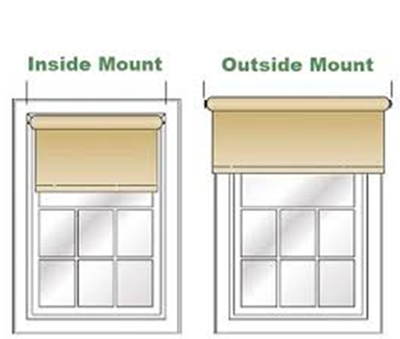
Inside-mounted blinds fit inside the window opening.
Because the shade must operate freely, manufacturers intentionally leave clearance on each side.
Those clearances become light gaps.
2. Outside Mount Shades
Outside-mounted shades often extend beyond the window opening but still leave enough space between the fabric and the wall to operate.
This creates another pathway for light.
3. Curled Shade Edges
Roller shade fabric naturally develops a slight curl over time.
That curl increases the opening along the sides.
4. Uneven Window Frames
Older homes rarely have perfectly square windows.
Small variations create inconsistent gaps that allow even more light through.
Which Window Coverings Are Most Affected?
Not every blind experiences side light leakage equally.
| Window Covering | Side Light Leakage |
| Roller Shades | Very High |
| Solar Shades | Very High |
| Zebra Shades | High |
| Cellular Shades | Moderate |
| Roman Shades | Moderate |
| Faux Wood Blinds | Moderate |
| Vertical Blinds | Moderate |
| Plantation Shutters | Low to Moderate |
| Draperies | Moderate depending on installation |
Solutions Ranked from Least Effective to Most Effective
1. Rearranging Furniture
Some homeowners place bookshelves or decorative panels near windows.
While this can block a small amount of reflected light, it doesn’t solve the underlying issue.
Effectiveness: ★☆☆☆☆
2. Blackout Curtains
Curtains help significantly, especially when they overlap the wall several inches.
However, they:
- take up wall space
- collect dust
- can interfere with window operation
- don’t always eliminate side gaps
Effectiveness: ★★★☆☆
3. Painter’s Tape
Many people temporarily tape the blind to the wall.
Although inexpensive, tape leaves residue, looks unattractive, and must be removed each day if you want to open the shade.
Effectiveness: ★★☆☆☆
4. Foam Weatherstripping
Foam strips reduce some light but often compress unevenly and wear out quickly.
They can also interfere with shade movement.
Effectiveness: ★★★☆☆
5. DIY Solutions
Tape or tack something light a blanket, sheet or plastic bag over the window.
Effectiveness: ★★★☆☆
6. Blackout Side Channels
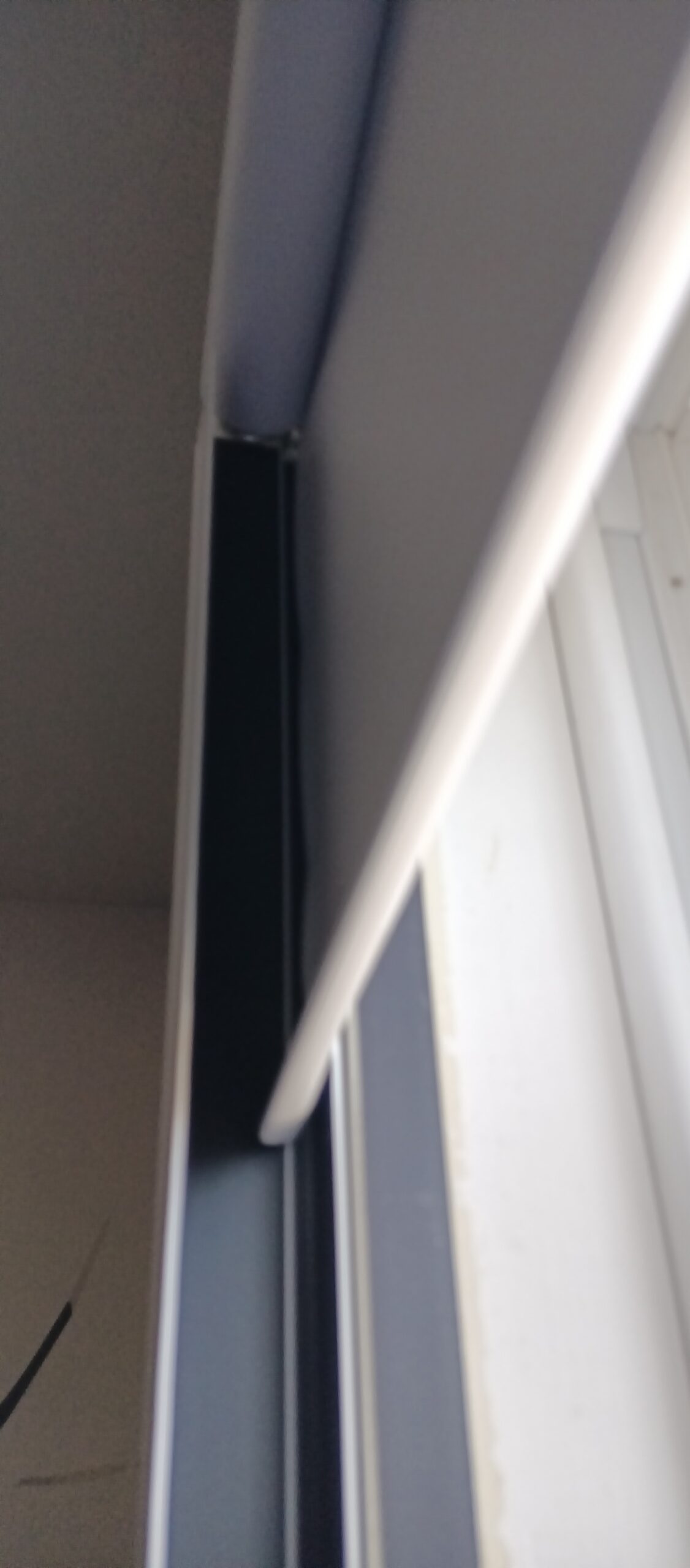
Side channels surround the edge of the shade, creating a physical barrier that blocks incoming light while still allowing the shade to operate.
Unlike tape or foam, side channels are specifically designed for this purpose.
They provide one of the cleanest and most effective ways to block light leaking around blinds.
Effectiveness: ★★★★★
I
Solution Comparison
| Solution | Effectiveness | Appearance | Cost | Installation | Durability | Removable |
| Curtains | Good | Good | $$ | Easy | Excellent | Yes |
| Tape | Poor | Poor | $ | Easy | Poor | Yes |
| Foam Weatherstripping | Fair | Fair | $ | Easy | Fair | Yes |
| DIY Systems | Good | Poor | $ | Moderate | Moderate | Usually |
| Blackout Side Channels | Excellent | Excellent | $$ | Moderate | Excellent | removable or permanent versions |
DIY Fixes That Actually Help
If you’re looking for inexpensive improvements before investing in a permanent solution, consider:
- extending blackout curtains farther beyond the window
- adding a cornice or valance
- sealing the top gap above the roller
- reducing reflective wall colors
- increasing overlap on outside-mounted shades
While these methods help, they rarely eliminate side light entirely.
What Are Side Channels?
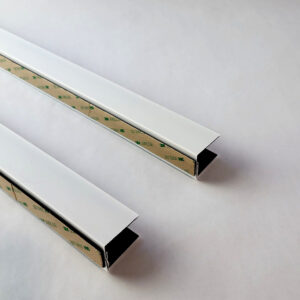
Side channels are narrow U-shaped tracks installed along each side of a window.
Instead of allowing sunlight to pass around the edges of the fabric, they guide the shade inside the channel while blocking side light.
Unlike weatherstripping or tape, side channels:
- maintain a clean finished appearance
- allow daily operation
- reduce fabric movement
- help compensate for slight edge curl
- are available for removable or permanent installation
Learn more on our Side Channels product page.
When Side Channels Are the Best Solution
Side channels are ideal when:
- you sleep during the day
- you have east-facing bedroom windows
- your blackout blinds still let light in
- your child wakes up early because of sunlight
- you’re creating a media room
- you suffer from migraines triggered by light
- you simply want the darkest room possible
Inside Mount vs. Outside Mount
Inside Mount
Advantages:
- Clean appearance
- Modern look
- Fits within the window frame
Considerations:
- Requires clearance on both sides
- Most susceptible to side light leakage
Outside Mount
Advantages:
- Greater fabric overlap
- Can reduce some side light naturally
Considerations:
- Larger wall projection
- Still benefits from side channels
Frequently Asked Questions
Do blackout blinds completely block sunlight?
Blackout fabric blocks light through the material, but most blinds still allow light around the edges unless additional light-blocking solutions are installed.
Why is light coming through the sides of my blackout blinds?
Most shades require clearance between the fabric and the window frame so they can operate smoothly.
How do I stop light coming through the sides of blinds?
Common options include blackout curtains, foam weatherstripping, DIY solutions, or professionally designed blackout side channels.
Are side channels worth it?
If side light is your biggest issue, side channels are among the most effective long-term solutions available.
Can I add side channels to existing roller shades?
Yes. Many existing roller shades can be retrofitted.
Will side channels work with motorized shades?
Motorized roller shades are compatible.
Are blackout curtains enough?
They help considerably but leave gaps unless you somehow attach the edge of the fabric to your wall..
What are window light blockers?
Window light blockers are products designed to reduce unwanted light around window coverings, including curtains, tracks, weatherstripping, and side channels.
Can I install side channels myself?
Yes, homeowners can install them using basic measuring tape, pencil and utility scissors.
Are removable side channels available?
Yes. Some systems use magnetic mounting, while others use permanent adhesive.
Will side channels damage my walls?
Properly installed removable systems minimize damage. Permanent adhesive systems are intended for long-term installation.
Do side channels work on cellular shades?
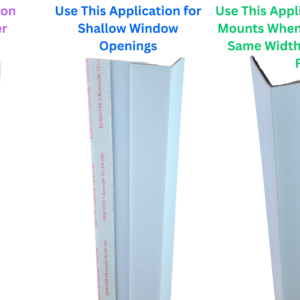
Absolutely. Both Adjustable Side Channels and L-Tracks can be effective solutions for cellular (honeycomb) shades. Side Channels offer greater adjustability for a wider range of installations, while L-Tracks provide a clean, streamlined solution for many standard applications. The right choice depends on your shade’s dimensions, mounting style, and the size of the light gaps you’re trying to eliminate.
What is the difference between L-Tracks and Side Channels?
Both L-Tracks and Side Channels are designed to block light leaking around the sides of window shades, but they do it in different ways. Side Channels surround and enclose the edges of the shade, making them ideal for roller shades where the fabric travels inside the channel. L-Tracks mount in front of the shade edge, covering the light gap without enclosing the fabric. Both are highly effective when used with the appropriate shade type and installation. The best choice depends on your window, the style of shade you have, and how much clearance is available.
How much darker will my room become?
Results vary, but blocking the side gaps often makes the most considerable improvement in darkness.
Can side channels reduce drafts?
While their primary purpose is blocking light, they may also reduce small air gaps around the window covering.
Final Thoughts
The biggest surprise for many homeowners is discovering that the fabric isn’t the problem.
The gaps are.
After installing thousands of window treatments over the past three decades, I’ve found that addressing those gaps often produces the single largest improvement in room darkness.
Whether you choose curtains, DIY methods, or professionally designed side channels, focusing on the edges of your window covering will make a much bigger difference than replacing your blackout fabric.
If you’re trying to create a truly dark bedroom, understanding—and solving—side light leakage is the key.
Ready to Eliminate Side Light?
If your blackout blinds still let light in around the edges, don’t assume you need to replace your shades. In many cases, adding the right light-blocking solution is all that’s needed.
Explore our Side Channels for roller shades or L-Tracks to see which option is the best fit for your windows. You can also visit Jan’s Corner for additional educational articles, or check our FAQ page for answers to common questions.
With the right solution, you can enjoy the darker, more comfortable room you expected from your blackout blinds.