If your blackout shades still leak light, the problem is usually not the blackout fabric. Most blackout fabrics do an excellent job of blocking light that passes through the material. The real problem is the gaps around the edges of the shade.
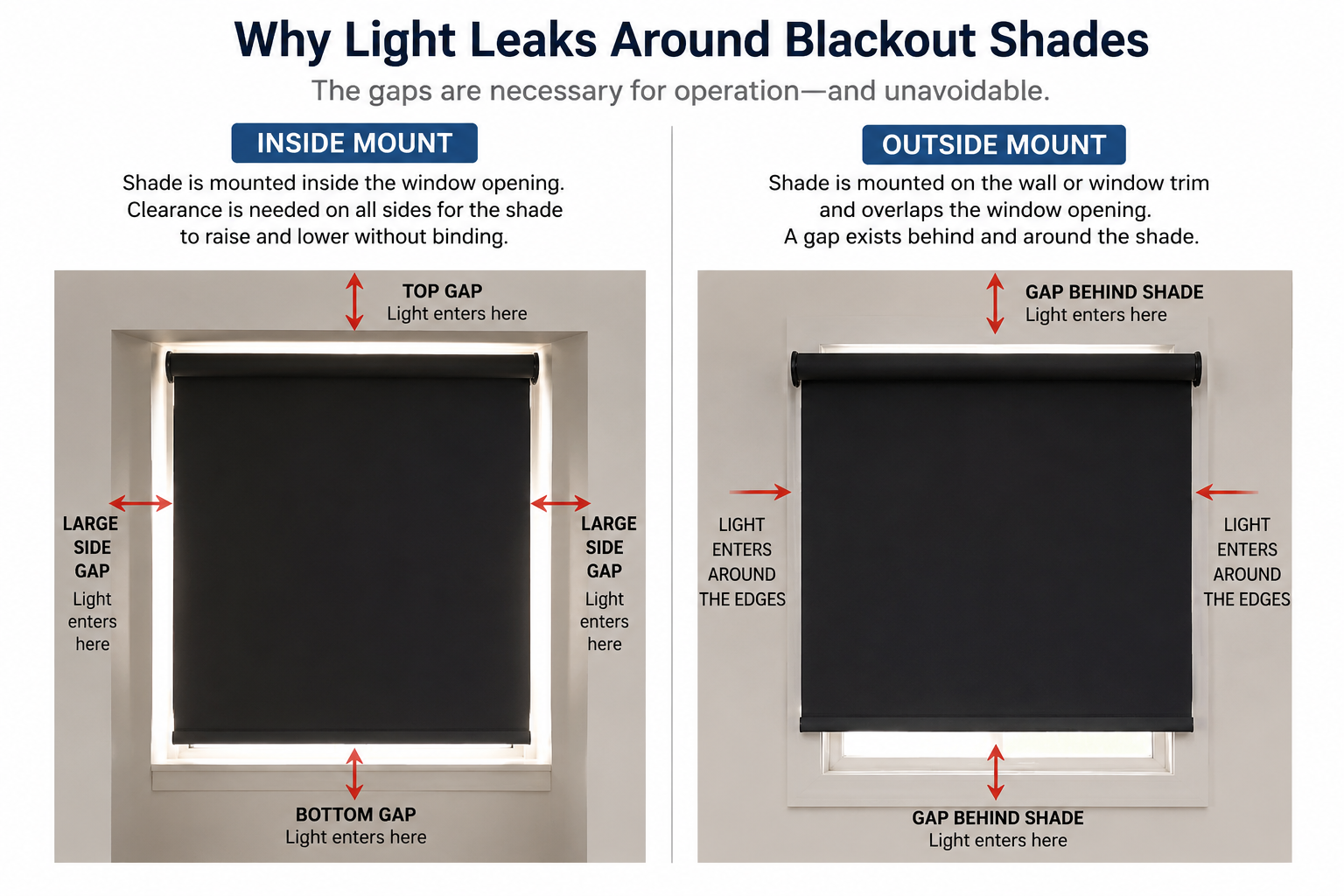
Shades that are installed inside your window frame (Inside Mount) the manufacturer intentionally makes the shade slightly narrower than the window opening. This small clearance allows the shade to move up and down smoothly without rubbing against the sides of the frame. Unfortunately, it also leaves narrow gaps where sunlight can enter the room.
Shades that are installed on to your window frame or wall (Outside Mount) the shade overlaps the window opening, but a space is created between the back of the shade and the wall or trim. Light can travel through this gap and around the edges of the shade.
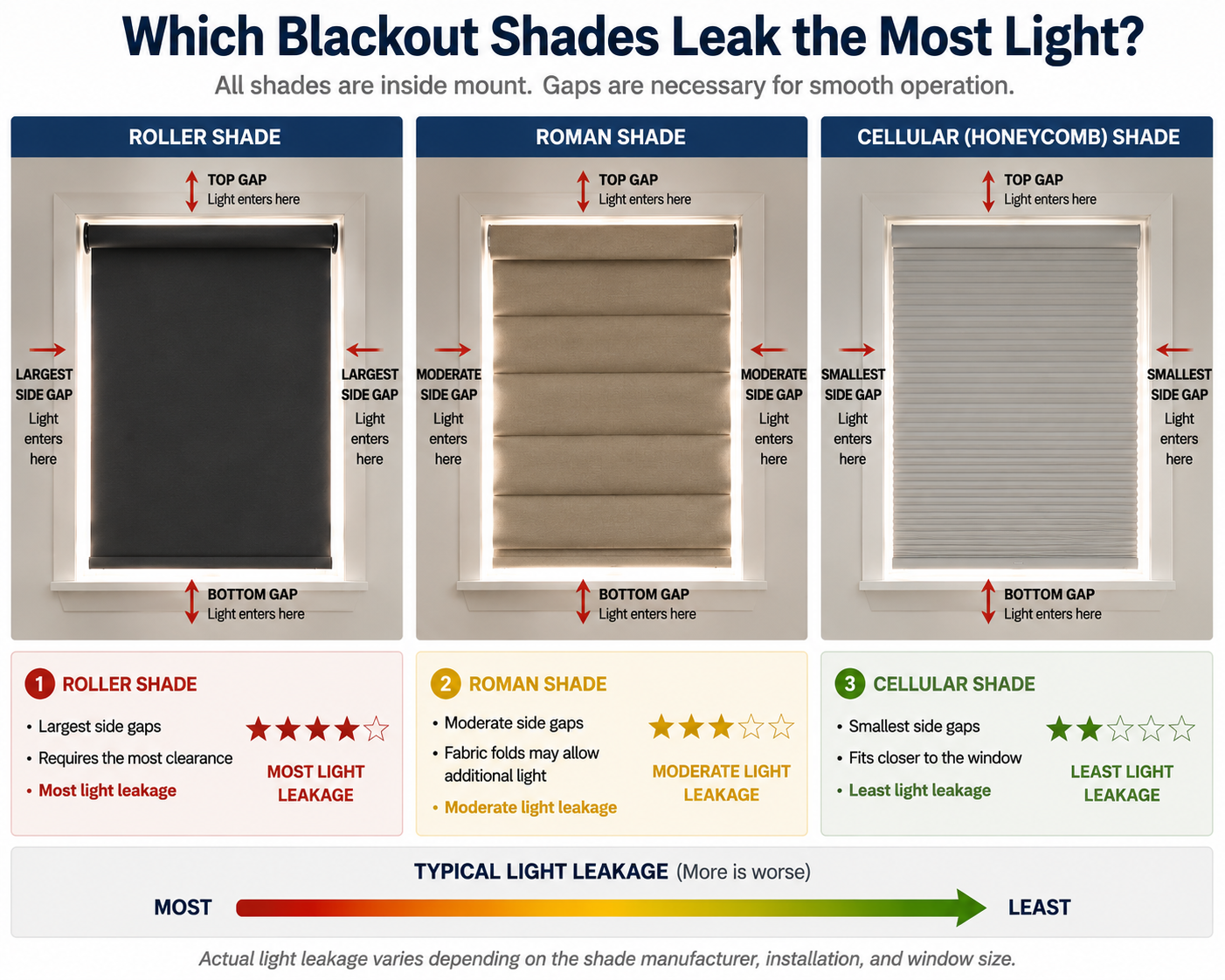
Different types of shades leak different amounts of light. Roller shades generally have the largest side gaps, followed by Roman shades, while cellular (honeycomb) shades usually have the smallest gaps.
The good news is that you don’t have to replace your existing shades. Products like Side Channels for roller shades and L-Tracks for cellular shades are specifically designed to seal these gaps and dramatically reduce light leaks.
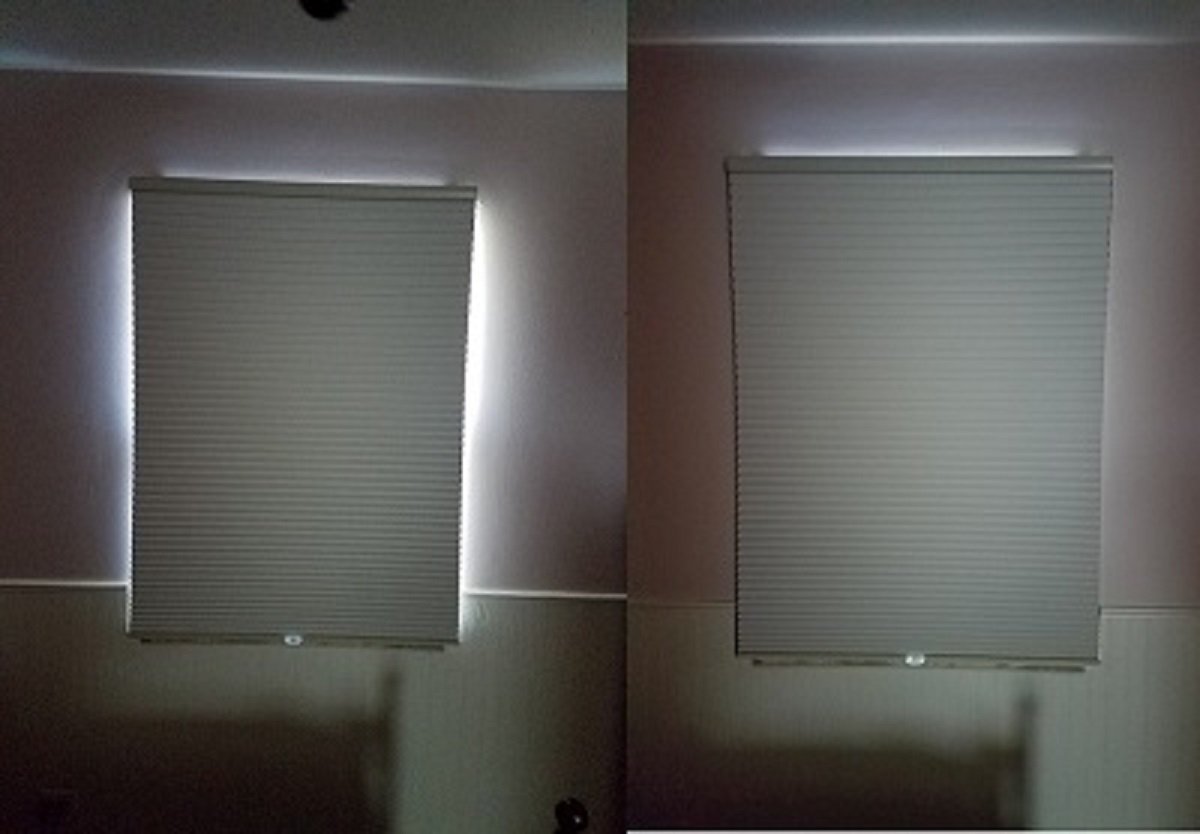
Bob The Blind Guy's Expert Tip
After more than 30 years installing window treatments and helping thousands of customers reduce light leaks, I’ve found that the shade itself is rarely the problem. In almost every case, it’s the small gaps around the edges that let light into the room.
Why Blackout Shades Aren’t Truly Blackout
Many people are surprised to find that their blackout shades still let light into the room. The good news is that the blackout fabric isn’t the problem. In fact, most blackout fabrics do an excellent job of blocking light from passing through the material.
The real problem is the gaps around the edges of the shade.
These gaps are necessary so the shade can operate properly. If a shade fit tightly against the window frame, it would rub, bind, or become difficult to raise and lower. To prevent this, manufacturers intentionally leave a small amount of clearance around the shade.
Unfortunately, those small gaps are exactly where sunlight enters the room. Even a narrow opening along the sides, top, or bottom can allow a surprising amount of light to leak in.
The solution isn’t usually replacing your blackout shades—it’s finding a way to reduce or seal those unavoidable gaps.
Which Types of Blackout Shades Leak the Most?
Not all blackout shades block light equally. While the fabric itself may be completely blackout, the design of the shade determines how much light can leak around the edges.
In general, roller shades have the largest light gaps, followed by Roman shades, while cellular (honeycomb) shades usually have the smallest. Here’s why.
Roller Shades
Roller shades typically allow the most light leakage around the sides. The fabric rolls onto a tube at the top, and the shade must have enough clearance to move freely inside the brackets. This leaves noticeable gaps between the edge of the fabric and the window frame.
If complete darkness is your goal, roller shades usually benefit the most from Side Channels, which cover these gaps and dramatically reduce side light.
Roman Shades
Roman shades generally leak less light than roller shades, but they can still allow a significant amount of light around the edges. As the fabric folds when raised, manufacturers must leave enough clearance for smooth operation.
Another common issue with Roman shades is that the fabric is often not perfectly flat. The natural folds and slight waviness of the fabric can allow small amounts of light to pass around the edges, making it more difficult to achieve complete darkness.
Depending on the style of Roman shade and how it’s mounted, you may also notice light entering along the sides and at the top.
Cellular (Honeycomb) Shades
Cellular shades usually provide the best blackout performance of the three because they fit closer to the window opening. The side gaps are often smaller than those found on roller or Roman shades.
However, even cellular shades are not completely blackout. You might be surprised at how much light can enter through even a very small gap. A gap of just 1/8 to 3/16 inch along the sides can make a dark room noticeably brighter.
For cellular shades, L-Tracks are often the most effective way to reduce side light while maintaining the clean appearance of the shade.
Which Shade Blocks the Most Light?
If all three shades use quality blackout fabric and are installed without any additional light-blocking accessories, they generally compare like this:
| Shade Type | Typical Light Leakage |
|---|---|
| Roller Shades | ⭐⭐⭐⭐ Most |
| Roman Shades | ⭐⭐⭐ Moderate |
| Cellular (Honeycomb) Shades | ⭐⭐ Least |
Keep in mind that installation is just as important as the shade itself. Even the best blackout shade can leak a surprising amount of light if the gaps around the edges aren’t sealed.
The good news is that you don’t have to replace your existing shades. The right light-blocking solution can dramatically reduce these gaps and help create a much darker room.
7 Ways to Stop Light Leaks Around Blackout Shades
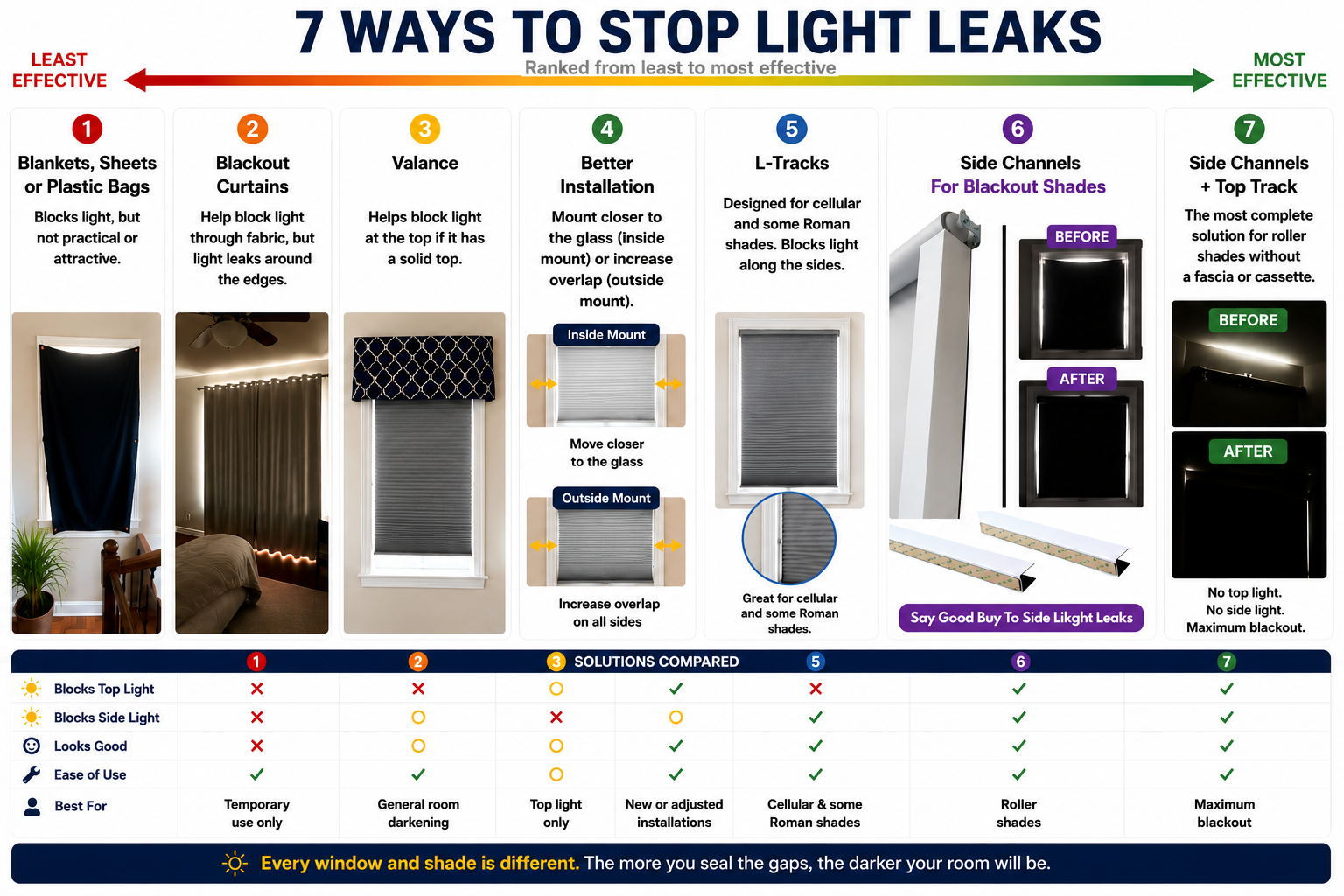
If you’re tired of light leaking around your blackout shades, you have several options. Some are quick, inexpensive fixes, while others provide a more permanent solution. Here are seven common ways to reduce unwanted light, ranked from least effective to most effective.
1. Blankets, Sheets, or Plastic Bags
Many people try hanging blankets, towels, sheets, or even taping plastic bags over their windows to block light. While these methods may darken a room temporarily, they’re not practical for everyday use.
Pros
- Very inexpensive
- Can block a lot of light
Cons
- Doesn’t look attractive
- Difficult to install and remove
- Prevents normal use of the window
Best for: Temporary situations only.
2. Blackout Curtains
Blackout curtains are a popular choice and can make a noticeable difference. They block light that passes through the fabric, but they don’t seal against the wall. Light can still enter around the sides, top, and bottom of the curtains, especially on sunny days.
For the best results, choose curtains that extend several inches beyond the window on all sides.
Pros
- Easy to install
- Improves room darkening
- Available in many colors and styles
Cons
- Light still leaks around the edges
- Takes up more wall space
Best for: Bedrooms where complete darkness isn’t essential.
3. Install a Valance
A valance can help block light entering from the top of the shade, but not all valances work equally well.
A decorative valance that is open on the top does very little to stop light. For the best results, use a valance that has a solid top, creating a barrier between the shade and the room.
Pros
- Reduces top light
- Improves the appearance of the window
Cons
- Doesn’t stop side light
- Decorative valances may not block much light
Best for: Reducing light above the shade.
4. Improve the Shade Installation
Sometimes you can reduce light leaks simply by adjusting how the shade is installed.
For inside-mounted shades, mount the shade as close to the glass as possible. This reduces the amount of light that can sneak around the edges.
For outside-mounted shades, increase the overlap on all sides of the window whenever possible. More overlap means less exposed glass and fewer places for light to enter.
Pros
- No additional products required
- Can noticeably reduce light leaks
Cons
- Limited by your existing window and mounting space
Best for: Anyone installing new shades or adjusting existing ones.
5. L-Tracks
L-Tracks are designed primarily for cellular (honeycomb) shades and some Roman shades. They mount along the sides of the window and cover the gaps where light enters, helping create a much darker room.
Because cellular shades already fit close to the window, L-Tracks can make a dramatic improvement.
Pros
- Excellent for cellular shades
- Clean, finished appearance
- Greatly reduces side light
Cons
- Not intended for most roller shades
Best for: Cellular and some Roman shades.
6. Side Channels
Side Channels are specifically designed for roller shades. Unlike simple side strips, they form an adjustable channel that surrounds the edges of the shade, helping block light while allowing the shade to move freely.
Because the opening is adjustable, Side Channels work with many different roller shade brands and bottom rail sizes.
Pros
- Excellent light blocking
- Adjustable to fit many roller shades
- Works with existing shades
- No need to replace your window coverings
Cons
- Designed primarily for roller shades
Best for: Roller shades where maximum side light reduction is desired.
7. Combine Side Channels with a Top Track
If your roller shade does not have a fascia or cassette, combining Side Channels with a Top Track provides the most complete blackout solution.
The Side Channels block light along both sides, while the Top Track blocks the light that normally escapes above the roller tube. Together, they dramatically reduce light leakage from the top and sides of the window.
Pros
- Most effective solution for roller shades
- Blocks both top and side light
- Works with many existing roller shades
Cons
- Not usually necessary if your shade already has a fully enclosed cassette
Best for: Anyone looking for the darkest room possible without replacing their roller shades.
Which Solution Is Best?
The best solution depends on the type of shade you have and how dark you want your room to be.
If you simply want to reduce glare, blackout curtains or a valance may be enough. But if you’re trying to create a truly dark bedroom for better sleep, shift work, a nursery, or a home theater, sealing the gaps around the shade is the most effective approach.
That’s why products like L-Tracks for cellular shades and Side Channels for roller shades are often the preferred long-term solution—they address the real source of the problem: the gaps where light enters.
| Solution | Light Blocking | Cost | Best For |
|---|---|---|---|
| Blankets/Sheets | ⭐⭐⭐⭐ | $ | Temporary use |
| Blackout Curtains | ⭐⭐⭐ | $$ | General room darkening |
| Valance | ⭐⭐ | $$ | Top light only |
| Better Installation | ⭐⭐⭐ | $ | New or adjusted shades |
| L-Tracks | ⭐⭐⭐⭐ | $$ | Cellular & some Roman shades |
| Side Channels | ⭐⭐⭐⭐⭐ | $$ | Roller shades |
| Side Channels + Top Track | ⭐⭐⭐⭐⭐ | $$$ | Maximum blackout |
Which Solution Is Right for Your Shade?
The best solution depends on the type of blackout shade you already have. The good news is that you usually don’t need to replace your existing shades to reduce light leaks. In most cases, you can improve the blackout performance by adding the right light-blocking accessories.
Use the guide below to help you choose the best solution for your window.
| Shade Type | Recommended Solution | Why It Works |
|---|---|---|
| Roller Shades | Side Channels | Side Channels surround the edges of the shade to block light leaking in from the sides. |
| Cellular (Honeycomb) Shades | L-Tracks | L-Tracks cover the side gaps while allowing the shade to operate smoothly. |
| Roman Shades | L-Tracks | L-Tracks help reduce side light and work well with many flat Roman shade styles. |
| Dual Roller Shades | Side Channels | Side Channels help reduce side light for both blackout and sunscreen roller shades. |
Need Even More Darkness?
If your roller shade does not have a fascia or cassette, adding a Top Track along with Side Channels creates the most complete blackout solution. The Side Channels block light along the sides, while the Top Track blocks light that escapes above the roller.
Still Not Sure Which Product You Need?
Every window is a little different. The type of shade, how it is mounted, and the size of the gaps all affect which solution works best.
If you’re unsure, measure the gaps around your shade and contact us. We’ll help you choose the best solution for your window, so you can get the darkest room possible without replacing your existing shades.
Frequently Asked Questions
Why do expensive blackout shades still leak light?
The quality or price of the shade usually isn’t the problem. Even expensive blackout shades need small gaps around the edges so they can be raised and lowered without rubbing against the window frame. Those gaps allow light to enter around the sides, top, and bottom of the shade.
Are blackout curtains better than blackout shades?
Not necessarily. It depends on what you’re trying to accomplish.
Many people like the warmth, softness, and decorative look of blackout curtains. They can make a room noticeably darker, especially when they extend well beyond the window.
However, because curtains don’t create a seal against the wall, light can still leak around the sides, top, and bottom. If your goal is complete darkness, blackout curtains alone usually won’t eliminate all of the light.
Can I fix light leaks without replacing my shades?
Yes. In most cases, you can significantly reduce light leaks without replacing your existing shades.
Depending on the type of shade you have, products such as L-Tracks, Side Channels, or a Top Track can block the gaps where light enters. These solutions work with many existing blackout shades, saving you the cost of buying new window coverings.
Are Side Channels removable?
Yes. Sleepy Time Tracks® Side Channels are available in two versions.
Removable Version
- Attaches with magnetic strips.
- Side Channels can be removed for cleaning, screen removal, or tilt-in windows.
- The magnetic strip remains attached to the wall or window frame.
Permanent Version
- Attaches using a high-performance adhesive.
- Creates a slimmer profile, making it a great choice when space is limited.
- When removed properly, the adhesive is designed to come off with little or no damage to most painted wall surfaces, making it a popular option for renters and homeowners who are concerned about wall damage.
Will Side Channels damage my walls?
The Permanent Version uses a specialty adhesive that is intended to remove cleanly from most painted surfaces. While no adhesive can guarantee damage-free removal on every surface, customers experience little or no damage when removing the tracks.
Will Side Channels work with my existing blackout shades?
In many cases, yes. Side Channels are designed to work with most roller shades and are adjustable to fit different bottom rail widths. L-Tracks are designed for cellular (honeycomb) shades and many flat Roman shades.
If you’re not sure which product is right for your window, contact us with a few measurements or photos. We’ll help you choose the best solution for your specific shade.
Can I install Side Channels myself?
Yes. Most homeowners can install Side Channels in just a few minutes using the pre-applied adhesive or removable magnetic mounting strips. No special tools are required, and the adjustable design makes it easy to fit a wide variety of roller shades.
Final Thoughts
Blackout shades do an excellent job of blocking light through the fabric, but even the best shades can’t stop light from entering through the gaps around the edges. Those small gaps are the reason many people are disappointed with their “blackout” shades.
The good news is that you usually don’t need to replace your existing shades. By choosing the right solution for your shade type, you can dramatically reduce unwanted light and create a darker, more comfortable room.
For roller shades, Side Channels are the most effective way to block side light. For cellular and many Roman shades, L-Tracks provide an excellent solution. If your roller shade doesn’t have a fascia or cassette, adding a Top Track can help eliminate light from above the shade for an even darker room.
Whether you’re trying to sleep during the day, create the perfect nursery, enjoy a home theater, or simply get a better night’s sleep, sealing the gaps around your blackout shades can make a remarkable difference.
If you’re not sure which product is right for your window, we’re happy to help. Contact us with a few measurements or photos, and we’ll recommend the best solution for your specific shade and installation.